A RADAR Interview with Autumn Whitefield-Madrano of The Beheld
Like many women, I’ve always had a tenuous relationship with makeup and beauty products. I was raised by two parents who were firmly against them–my mom wore no makeup and warned me against its addictive nature (‘Once you start wearing it you won’t be able to stop…’) and my dad frequently let me know the beauty industry was out to suppress and oppress women, and my purchasing and using makeup and beauty products would mean I was falling their prey.
I respected (and respect) them both greatly, and the truth is, they were in some ways very right. But I’m an incredibly curious person and another member of my family, one of my aunts, is a model and actress. Besides being physically beautiful, she’s one of the most wonderful people I know, so I respected (and respect) her, too. I relished going into her bathroom and examining what seemed dozens of jars of sparkling dust in titillating colors, rows of brushes poised and propped elegantly, bottles of sweet smelling perfume. To my parents chagrin or not, once I turned 13, she started giving me really nice makeup as birthday and Christmas gifts. So began my journey.
Over the years I have called into question my use of makeup and the construction of my physical self quite a bit. There is no denying that a woman is perceived very differently depending on her use of makeup and beauty products, and that it gets not only expensive but time consuming, pulling women out of other more potentially cerebral projects.
But I also don’t think using makeup/constructing one’s appearance is necessarily negative or wasteful. Rather, I’ve discovered that the subject is fascinating, incredibly layered, and pulls so many issues around gender, identity, sexuality, labor and capitalism along with it.
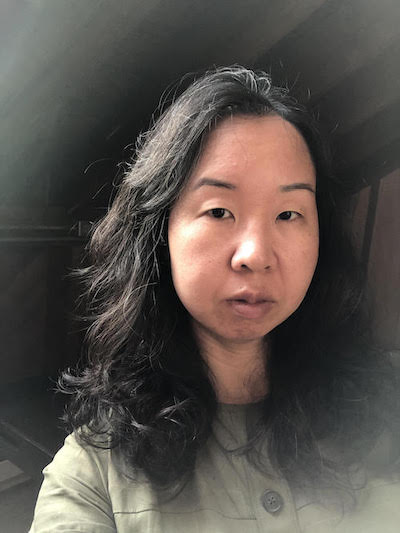
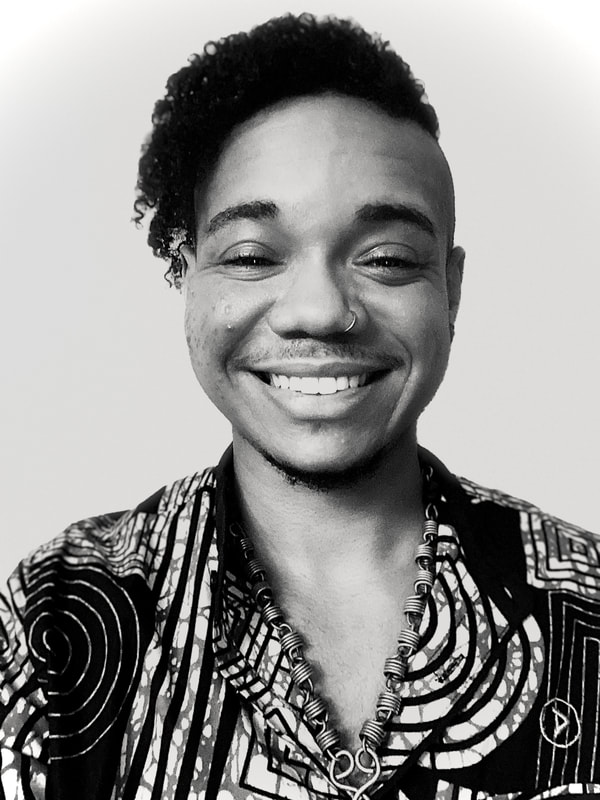
I recently came across writer Autumn Whitefield-Madrano’s really interesting project, The Beheld, a blog dedicated to the exploration of beauty and what it means. I asked her if she’d be willing to let me ask her some questions on the subject, to which she kindly said yes, and provided some really great responses.
Rebekkah: Thanks so much for talking with me and RADAR! How did you first get interested in taking on beauty as an intellectual project?
And I suppose by being a fairly cerebral person, the work can seem intellectual, though I haven’t done any formal study of beauty or aesthetics. Through writing my own experiences I found more literature that tackles these questions. I hadn’t known that beauty had ever been treated as an intellectual topic and it felt like a relief to find these works. What I’m doing isn’t necessarily intellectual in that tradition; I’m a writer, not an academic of any sort–I’ve got a bachelor’s in journalism and a minor in women’s studies. But what I’m doing is treating beauty with a certain degree of seriousness for an audience that isn’t reading philosophical treatises on the matter. I think that’s important to do for plenty of topics of interest to intellectuals, but particularly beauty, because it’s such a part of our lives and there are so many messages we get about it every day.
Rebekkah: Can you explain a little bit about your wonderful new work with The New Inquiry?
issues, or politics, or philosophy.By asking me to syndicate The Beheld at The New Inquiry, they were demonstrating that a blog that treated beauty as a serious topic had a valid place in a larger conversation–and the best part is that the team there wasn’t looking at it as some sort of big feminist-progressive step to have a beauty blog there. I don’t necessarily consider myself a political blogger, but contextualized, much of what I do indeed becomes that. I also liked that TNI wasn’t doing some tokenism thing–about half the bloggers are female, and it’s not like what I’m doing there is relegated to some special ladycorner. I’m a big believer in spaces directly targeting women, but unless women are a part of the broader conversation we’re not going to get anywhere.Rebekkah: I have talked to so many different people (men and women, academics, artists, writers and others) about the challenge for women to integrate their physicality/beauty with component of self within society. Yet it always seems to boil down to the notion that female beauty exists in a way male beauty just doesn’t. Do you think culture will always uphold female beauty? Do you have any ideas/propositions about this being dealt with alternatively?
Autumn: The changes our culture would have to undergo in order to not hold female beauty in the light it currently does are so radical that I can’t even imagine where we’d begin. I think we’re talking about the sort of change that happens not with a generation, but with generations, lots of them. I don’t think woman-as-decoration is innate; there are plenty of societies throughout history where men have been the ones who have been seen as the ethereal beauties. But in our culture? No. I don’t see that sea change happening anytime soon. And I’m actually less interested in eradicating that than I am in ameliorating it. Obviously feminism has been an enormous amelioration here, and things have changed pretty quickly when you think about it. I think we can continue to call out double standards and to make sure
that we keep women of all stripes in the public eye–women who have the cultural currency of conventional beauty, and women who don’t, and not stratifying women along some faux spectrum of smart vs. pretty.
What I would really love to see eradicated–and will do my part in helping eradicate–is the notion that because women’s beauty is this innate, primal thing (supposedly), that means it has a power over men, and that if women just learned how to tap into that power more we’d have arrived at a place of “separate but equal.” I think that’s bullshit. There are undeniable benefits that come with beauty, but the real benefits of that beauty are equal for men and women–better pay, for example. The “power” that beautiful women supposedly have over men boils down to free drinks, essentially. Some women may be able to work their beauty to their benefit to get, say, mentoring or tutelage–that’s what Catherine Hakim argues in her book Erotic Capital. But that “power” can be whisked away at the whim of the person with the actual power. That is, at the whim of a man.
Rebekkah: What are you reading right now?

Rebekkah: What issues are you really interested in tackling or exploring more deeply, both with The Beheld and otherwise?
Rebekkah: How do you personally define “beauty labor”?
way when you’re dressed well, or poorly; it’s the knowledge that by being a woman in public, you’re being looked at, and the ways that knowledge affects us in ways we probably can’t imagine. Emotional beauty labor is sensing that someone is admiring your appearance and changing your affect–however slightly or subconsciously–because of it. Emotional beauty labor can be playing the role of the pretty girl, or of rejecting it. I think much of the time emotional beauty labor is a burden, but I also don’t want to neatly cap it as just “Oh, it’s insecurities.” Yes, insecurity can drive some emotional beauty labor–but so can flirting, or feeling beautiful, or feeling dutiful. It needs examination.Autumn: I’ll confess that I don’t read that many new books, and in fact I rarely read fiction at all. So I’m drawing here on my own experience as an essay writer and blogger, and on the discourse that’s surrounded women’s writing lately. With that in mind: The Internet, I think, has been a huge development for women’s writing seeing a broader audience. Women have always written letters and diaries; we’ve been socialized to prioritize the personal. What’s been happening for a while now is that women’s “personal” writings, which now can have an enormous public stage, are being seen in a more political context. Before, only women’s studies people were really looking at women’s diaries as valid literary works, and today it’s being looked at more seriously in the literary world. That said, and to answer the second part of your question, we need to remember a writing 101 maxim: Just because it happened to you doesn’t mean it’s interesting. I’d like to see diaristic women writers more fully understand that what makes their work important is that readers may be able to relate to it, and they should be able to walk away from your piece with what we call a “takeaway.” Use the form to illuminate a broader female experience, not to illuminate how rare and special a butterfly you are. I have little patience with preciousness, and I think that’s true of most readers.
Rebekkah: How has your project with The Beheld made you feel differently about yourself and question of beauty/women/identity? What surprised you the most?
Autumn: The biggest surprise I had was that I quickly found out that I didn’t want to let go of the artifice of beauty–rather, I quickly learned that my instinct to engage with that artifice wasn’t something that must be overcome. Before starting The Beheld I was much more binary in my thinking about beauty: I knew I felt fascinated by it, but I wrestled with feeling ashamed of that fascination because all that was fluff, right? And beauty labor was a way of trying to not feel bad about the way I looked, right? But once I started formally interviewing other women and articulating more of my own thoughts on beauty, I realized that wasn’t the case much of the time. For example, I began to see my use of makeup not just as a daily nod to the patriarchy–which it is, in part, I admit–but as a way of defining my public face to the world, and of articulating how I wish to be seen.
I feel more passionately about the articulation of femininity and gender than I di
d before starting The Beheld. I’m working now on seeing the diversity of how femininity is expressed by different people–how someone who isn’t what you’d call “girly” might express her femininity, if being female feels like an important part of her identity. Perhaps there are some people for whom their sex doesn’t feel terribly relevant to their identity–it feels enormously relevant to me, and I know ways that plays out in my self-presentation, but I want to know more about how it plays out with other people. One of my favorite interviews was with Kelli Dunham, a wonderful boi comic and founder of Queer Memoir. She identifies as butch, a boi, and she doesn’t really perform femininity. But as she put it, “A new haircut is a butch accessory.” So what I would call beauty work was still a part of her gender expression. She was rejecting traditional beauty work but it wasn’t entirely absent either, and that illuminated for me how a binary way of looking at beauty work wasn’t going to be helpful. *
Autumn Whitefield-Madrano began her writing career in New York as an intern for Ms. Magazine. She’s since had an extensive reach as a freelance writer, her essays having appeared in Marie Claire, Salon, and Glamour. Her work in copy–editing beauty pieces for women’s magazines led to the creation of the Thoughts on a Word series, in which she examines the etymology and usage of words used to describe women’s appearance, as well as The Beheld. She has also just become a regular blogger for The New Inquiry.
Reading List For Moving Without Losing Your Damn Mind
Your Favorite Cookbook
My old-reliable favorite cookbook is Vegan With a Vengeance by Isa Chandra Moskowitz even though I’m not vegan anymore. I think it’s because it’s one of those cookbooks that has a lot of anecdotes between the recipes which I used to think were really boring, but now in my old age kind of love. When I’m really stressed about why-the-fuck-is-the-Uhaul-website-down, I can just imagine all of the seitan I’m going to make in my new kitchen and bliss out.
Double Duce by Aaron Cometbus is about living in punk squats in Berkeley and Oakland and gives me a lot of nostalgia both because I read it right before I moved to the Bay Area and because it reminds me of nasty and tender-hearted places I have lived. A recent reread kind of bummed me out because this book is really hetero, but there aren’t that many books about living collectively and/or that help me romanticize living sandwiched between two liquor stores so I’m going to give it a pass.
Apartmenttherapy.com
This website is really aptly named. I lost a couple of hours looking through the archives. Did you know that you can make a lampshade out of a tree stump? Did you know that you can make a bird feeder out of a tangerine? Did you know that you can make steamer trunk out of a filing cabinet? I will probably never do any of these things but I take great comfort in knowing that I could.
Witchy Self Care Zines
The Mental Health Cookbook is a really good resource for things like medicinal teas and super nutritious fermented stuff and positive energy flower tonics. Self care is a radical act is what I like to say when I need everyone to leave me alone while I sip lavender tea and browse tumblr.
I find righteous anger to be the most get up and go emotion. I reread part of this awesome critique of neoliberalism and hulked out so hard that I set up all of the utilities at my new apartment and emailed like ten people on Craigslist about furniture.
Histrionic Musical Numbers
I don’t know if it’s related to moving, but I’ve been really into Bette Midler since the relocation process began. The 1993 TV movie adaptation of Gypsy is amazing: http://www.youtube.com/watch?v=IrpXoNBCz7Q
On Hysteria, Transphobia, Man-Hating, Sobriety, Anonymity and Writing.
Below is an article I wrote for a recovery-themed web site. After pitching some topics at them, we settled on a personal essay about being queer in Alcoholics Anonymous. I knew this was somewhat controversial, but the taboo being broken was anonymity – a guiding philosophy of AA that has been recently questioned by younger, urban members of of the program. While protecting the anonymity of other members of AA is obviously super important, it has always confused me that I can’t be honest on a public level about being a member of AA. As a writer I have written A LOT about getting wasted. Now I find myself with almost nine years of continuous sobriety, and being unable to write or speak honestly about how that happened is not only personally frustrating, I think it sends a dangerous and false message to anyone with a drug or alcohol problem looking for inspiration to get sober. Unable to talk/write about AA, it looks like I just ‘got sober’ – like, on my own, through my very own will power, which most alcoholics find impossible. It was certainly impossible for me – on my own, my sobriety was a heartbreaking succession of brief triumphs and baffling failures. It wasn’t til I got into AA and learned about what it really is to be an alcoholic that I was able to stay sober. I can say with 100% certitude that I wouldn’t be sober today if not for AA, and it’s also my opinion that 99% of people trying to get sober outside the rooms of Alcoholics Anonymous will not be able to do it. The odds are grim for alcoholics in any case – AA has the highest rate of sustained sobriety than any other method, yet even in AA the majority of people who try it will not stay sober. With such a lousy hope for recovery, why not go with the program with the best results is my thought. So, that’s why I’m choosing to override AA’s tradition of personal anonymity, knowing that a lot of people within the program are going to think it’s shitty. Here’s an article that elaborates on the current trend toward forgoing anonymity in AA.
I wrote my article about being a queer person in AA without really knowing what would come out. I sat down and followed some ideas and what I got was the essay below, which didn’t get published on the recovery web site in spite of the editor saying it was ‘great — incredibly well written, full of excellent points and so very different from anything we’ve done before.’ Because I speak about having been a pretty strong man-hater in the past, and because I briefly site some reasons why women might become man-haters (in case no one is paying attention to, um, life), the editor wanted me to add that I know some ‘wonderful men’, – I guess to make the (male?) reader feel less threatened by the piece. I pushed back, saying it is a pet peeve of mine that when making a strong critique of maleness in our culture, a woman has to then give soothing pats to whatever ego might have gotten stung. It goes without saying that I know a ton of great men. If I was writing an article about awesome men, I’d tell you all about it. But I wasn’t, I was talking about misogyny, and the insertion of someone else’s opinion into the piece felt insulting. The editor responded that she and her editorial director were adamant about just a single sentence that assured the reader that I know some wonderful men, otherwise the piece sounds ‘a bit hysterical.’ Anyone who took an Intro to Women’s Studies class ever knows that hysterical is the word that gets slapped on women who speak out about the state of women in the world. It is so ridiculous and Victorian it’s astounding that it would still be used, today, by editors trying to lighten the harshness of a feminist critique.
I added the sentence. I wanted the $200! Most blogs pay $0 – 50, so this was sort of a cool assignment. But it sat very badly with me, and I got very resentful that an angry feminist just can’t be all angry about it every now and then, when there is so very much to be angry about. The ‘hysteria’ accusation sat especially ickily, hysteria being the Victorian malady that afflicted only women and was often treated (see above) by the visit of a vibrator-wielding doctor who gave the discontented lady an orgasm because, as many women upset by sexism, they just need a good fuck. Probably Victorian women did need a good fuck, but I bet they’d still be pissed about misogyny. As many alcoholics know, resentment is very hurtful to one’s sobriety, so I pulled the piece, started a thread of Facebook about women writers needing to console men in their writing and people of color being pushed into saying that ‘not all white people are bad’ in critiques of racism, and felt pretty awesome about my decision. Anyway, here is the essay!
Oh – and when you Google Image ‘hysterical’ one of the sub-categories is ‘hysterical woman’! And when you search ‘hysterical woman’ the sub-categories are: ‘screaming woman’ ‘angry woman’ ‘crazy woman’ ‘crying woman’ and ‘sobbing woman.’
I had a Mexican friend who had to stop going to a particular AA meeting because of too many white guys sharing about running with Mexicans as part of their bottom, as if they’d been fed a steady diet of 70s-era cops-and-robbers shows depicting Mexicans and other brown people as criminal elements and were unable to shake it from their skulls. My city, San Francisco, is teeming with Mexican people not doing drugs with bottoming-out white guys, but it only goes to show where these particular honky alcoholics had been spending their time. It bummed me out so hard to hear my friend’s grievance, though I know not why—eight years in the rooms of AA have shown me that alcoholism does strike a baffling cross-section of humanity. Nice, smart people and ignorant buttholes can all become alcoholics—and then become well in AA. It’s just that some people’s “well” is more well than others. As my sage ex-sponsor-in-law once said, “In AA, you sometimes hear about alcoholism, and sometimes you hear…alcoholism.”
I try to remember this when I hear an equivalent tale shared during AA drunkalogues—and then I was hanging out with, well, Transsexuals! In the Tenderloin! Such shares aren’t common but they’re not rare, either, and when I hear them my stomach drops and my ears get hot and I send kill vibes at the guy speaking, then spend the rest of the meeting silently tormented about if I should say something (No Cross Talk!) or let it slide (Coward!) I know that, since I have a lot of trans friends I’m more sensitive to this than most people but that’s not the problem.
The problem is that more people aren’t sensitive. With all the trans-visibility in pop culture during the past years, the one that seemed to really stick is “hot tranny mess,” a phrase I’ve never heard put forth by a trans person but one which resonates with our contemporary archetype of the fucked-up trans woman, teetering around in her heels with her wig askew. Or something.
In San Francisco, the Tenderloin is a neighborhood populated with immigrant families from Southeast Asia and South America, poor white and black people, a multicultural bouquet of young people renting the cheap apartments, and transsexual women. And yes, a lot of the trans women are prostitutes, and a lot of them have drug and alcohol problems. You might be a prostitute, too, if no one would hire you because you’re transsexual. And you’d probably have a drug and alcohol problem, too, if you were among the class of people most likely to die from violence—a demographic that deals with intense street harassment on the daily; a people whose condition often requires medical intervention not covered by insurance. That is, if you could get a job with insurance, or a job at all. I turned tricks and drank and used heavily in situations not nearly as stressful as these.
I came into AA a paranoid, man-hating queer, and one of the most transformative affects the program has had on me has been relieving me of my man-hate. The world sure didn’t change—if you feel like hating men, there are always a hundred million facts and figures to keep you secure in your stance. I actually think hating on men can be a normal and healthy stage for women to go through—most all women I know have been fucked over majorly by sexism and misogyny, and we’re bullied into seeing these obvious societal patterns as isolated incidents. But if one out of six women have dealt with a rape or attempted rape, how many men out there are rapists? That’s a statistic we don’t get.
Like all unhealthy coping mechanisms, my man hating served its purpose for a moment but by the time I came into AA, it had turned against me as harmfully as drinking. It was holding me back in my intimate relationships, holding me waaaaaay back in the world at large, and it was hurting my heart. It doesn’t feel good to hate people. In AA, I listened to men that had suffered badly. I watched men cry as they spoke about how they struggled today. I heard men confess how sick their hearts and minds had been, and inside those confessions were sometimes real sorrow at how they had treated women, or regarded queer people.
I always knew sexism and homophobia hurt straight men as much as anyone, but you rarely get an opportunity to see that. In AA, where men were desperate and vulnerable, I saw it.
All this contributes to why I get so pissed when I hear guys elaborate on their bottoms with tales of trans women. I have seen how working the program can really raise consciousness, and it feels like such a fail when people aren’t able to regard the women they spent their bottoms with as addicts just like them, and addicts with perhaps fewer resources than the average addict—if you consider trans phobia in the rooms to be a barrier, and I do.
I’ve heard a lot of people in AA speak out against the idea of labeling those we spent our darkest days with as “lower companions”—those rotten, morally bankrupt, tainted people we had around us when our real friends had fled. Obviously, we were all someone’s “lower companion” at the height of our debauch; to think otherwise is totally arrogant. Before calling out the sort of folks you were hanging in the gutter with, it may be worthwhile to pause to recall that someone was probably slumming it with you.
Yeah! I wrapped it all up at the end with a nice little moral! Cause that’s what you do in magazine writing! Okay, thank you and good night.
In the Company of Women: A Trip to the Salon
“You qualify for a free scalp and hand massage at your appointment today,” the receptionist at the hair salon told me. “Lisa will get you started. Follow me right this way.”
She motioned her long fingers, and I followed the swoosh of her dress to a room in the back where I was laid in a reclining chair. Lisa was already there waiting for me.
“So, what type of scented oil would you like for the massage? We have vanilla, grapefruit, jasmine, sandalwood or lemon grass.”
“Vanilla.”
Lisa put herself to work right away, lifting my hair into the bowl behind me, running her oiled hands through the strands, then moving her fingers back and forth along my scalp.
I could see the crux of her armpit as her hands moved over my head and I could smell the light scent of her perfume. I watched the line by her ear where her concealer ended, leaving slightly lighter skin. She was wearing a dress with a flowered skirt and a gold belt. She didn’t speak to me, remaining completely focused on her task.
Once she had finished with my hair, she lifted the chair forward and asked me to hold out one of my arms.
“Vanilla still?” she asked.
“Sure.”
Once I was upright, I started to look at the other women in the salon. Two women were seated to my right, also receiving their complimentary massage treatments. The expressions on their faces were pleasant and relaxed, lots of half smiles. The women working on their arms and heads were like Lisa, brisk and business-like but all well dressed and coiffed.
“I had the Brazilian blowout treatment at this one salon,” I heard a woman across the room, who was having her hair trimmed, say to the stylist working on her. “It was a nightmare.”
“Really? Where? Can you tell me the name of this salon?”
The place smelled of slightly burnt hair and the intermingling of different perfumes and shampoos. It struck me fully at that moment that I was seated in a room full of all women, women bent over one another, women all working in one way or another for beauty and maintenance and validation.
For a moment, I smiled at this thought, placing it in the context of positive communal experience and embracing the pleasure of having warm, soft hands rubbing mine, of being made beautiful, of being in the presence of beautiful women.

But I felt and always feel a sharp twinge of resistance to this somehow. An edge seems to exist in all these places that pricks. Every compliment—“What a great pair of boots—where did you get those? But I could never wear them anyway, I’m too old now….”—“You have such beautiful hair– and the color! What do you use? You don’t color it? It’s natural? I hate you. I would kill to have a natural color like that”—contains a bit of violence and self-loathing.
I have never been in a salon, or women’s clothing store, or make up counter, and not heard self-deprecating comments from women of all ages, shapes and sizes.
Last year, I went to a swanky, women-only “Clothing Swap.”.
There was a bar at the event and they served sweet sugary drinks in childlike pink and peach colors. The bartenders were all women in corsets with bright pink lip gloss and bleached blonde hair that had been curled into sticky looking ringlets. They asked: “What would you like, honey?”

There was a huge tapestry draped over the top of the bar featuring a rendering of a beautiful, leggy woman in a black leotard with slits cut out along the sides of her ribs. She was wearing strappy black stilettos and was lying on a bear skin rug with her back arched. Her long, black hair was draped alongside of her, bangs covering part of her eye and face. She was holding a martini glass and had one long, milky white leg bent upward, the other stretched out along the white fur of the rug.
“That’s what I look like every night when my husband comes home,” my friend joked, gesturing her peach filled glass towards the tapestry. “More like I’m wearing sweats and my hair is a disaster.”
I stood with my drink in hand, listening to the sound of all the high heels sliding across the marble floors, watching heavily manicured hands delve into piles of dresses, seeing slick, dyed heads of hair snap back and forth.
Many men have said to me: “Don’t you get it? Women have all the power.”
But it’s not women themselves—it’s beauty–and particular kinds that have power. Beauty is made out of impossibility: it’s ephemeral, never completely attainable, barely graspable, always fleeting.
And we are not the gatekeepers. It is only deference to this larger force, pulled from time and place, from fabric and pixels, that we might qualify.
Of course I want it—perhaps even have some of it–but it scares me. I’m petrified of the extent of its power, its control, but its pleasure perhaps most of all. I work towards it, just like all those women at the salon, at the clothing swap. I invest time and I invest money in creating and maintaining it. There’s even investment made in looking as if there has been no investment at all.
I won’t deny I often smile when examining my own image, taking pride in the success of my construction. Of course compliments pertaining to my looks are sources of flattery. But there’s also the memories of sobs of defeat in dressing rooms over ill fitting items, moments of panic when catching sight of myself in an unflattering photo or store window. It leads to the jagged fear that I’m too ugly to deserve the body of a woman.
A few months ago, I walked once more into a salon. There was a woman getting a pedicure, and when one of the over-eager attendants encouraged her to also get waxed, she shook her head and laughed.
“Oh no, honey, I’m married! I don’t have to try anymore.”
“You’ll be married in a couple of years,” an older man once told me upon us discussing the question of female beauty maintenance. “You won’t have to even think about it.”
But the fear I articulated to him wasn’t desiring to be soothed via a permanent relationship, nor do I believe it will go away as I age. It’s about something deeper, it’s more about recognition, about wanting to build something people will come to.
And the trouble is, so much of what’s available to me dictates I have to start with my body, that the splash of my face and the turn of my waist are where both I and home belong.
Overdue Books! (And Calendars!)
You may know Greg Youmans as the sensitive, somewhat hapless cisgendered gay who plays straight man to Chris Vargas’ somewhat sulky, radical trans queer in the hilarious video series Falling in Love . . . With Chris and Greg (And if you don’t, get on it! What’s wrong with you? What have you been doing with yourself?). You may not be aware that in addition to a hilarious writer and actor, he is also a scholar! Yeah, like a Doctor. He’s fairly humble about it but may need to stop that with the publication of his first book, Word Is Out, part of Arsenal Pulp’s Queer Film Classics Series. It’s a book about the groundbreaking 1977 documentary that aired on PBS and introduced many Americans to the first out gay or lez they’d ever seen – including, importantly, others gays and lezes. Dr. Youmans’ exploration of the book is serious and playful; full of queer history and film criticsm, the table of contents are laid out as so: A is for Anita (Bryant, whose ghastly shadow had fallen over the country at the time of the film); B is for Burden of Representation (Those poor filmmakers! Being the first to represent queers – horribly sensitive, PTSD-suffering, love-to-eat-their-own queers – on such a grand scale. Terrifying!), G is for Gearheart (Sally Gearheart, who outs herself as a lesbian separatist in the film.) Word Is Out (Hey why is this all italic all of a sudden! I can’t make it stop! Heeeeeelp!) the book is a juicy look at a bunch of 70s queer artists and activists and ordinary individuals (if a queer in the 70s could be ordinary, which I doubt) trying to represent themselves and their community, and it’s sort of gossipy and great. You don’t need to have seen the movie to get a lot out of the book – movie’s history, delineated by Dr. Youmans, is a story on it’s own – but why not rent the movie, too? I love queer history!
A new year is exciting, because you feel like you can put all the failures of the past year behind you and start anew and ALSO because you get a new Invincible Summer I Like Animals Calendar from Nicole J Georges! If you haven’t gotten yours yet it’s a LITTLE sad because you missed looking at that drawing of the monkey hugging the chihuahua all January, but order one from her website today and you’ll be able to spend my birthday month (that would be February) looking at an illustration of a kindhearted Pika offering a bouquet to a tabby cat with it’s head in a cone. And then for the rest of 2012 you can hang out in Nicole’s wonderland of tender animals who love one another unconditionally and sometimes wear costumes or ride in hot air balloons. Bonus: My calendar came with a few little postcards of some of the images, but that might be special because we’re friends. So, get to making friends with the artist!
Speaking of calendars, here is an overwhelmingly amazing one from the psychedelicly organized mind of one of my favorite artists, Xylor Jane. It’s a 397-day calendar, and you are urged by the artist to mark off the days with a black crayon, which clearly would look really good but I feel like I’m going to mess it up, and I don’t want to mess up TIME, or a piece of art by Xylor Jane, so I think I’ll probably frame it and ponder it like the mystical relic it is. I don’t know how you can get your hands on this so I guess I’m just bragging. But you CAN see the artist’s show up at CANADA in NYC’s Chinatown at the end of April. Sister Spit calls it quits in Manhattan on April 30th (just for the tour, not forever!) so I’ll be hustling down there to get mesmerized by Xylor’s colorful, coded canvases.
Since I’ve started blogging about my attempts to get pregnant on xoJane I’ve gottena lot of baby advice, some baby books, and this object d’art: a copy of Labor of Love: The Story of One Man’s Extraordinary Pregnancy by Thomas Beattie, aka The Pregnant Man, with a re-designed cover featuring the aforementioned Chris Vargas of Falling in Love . . . With Chis and Greg as Thomas Beattie – tender, serene, and very, very pregnant.
Guess what! There’s still a huge stack of books on my table! More soon!


Recent Comments